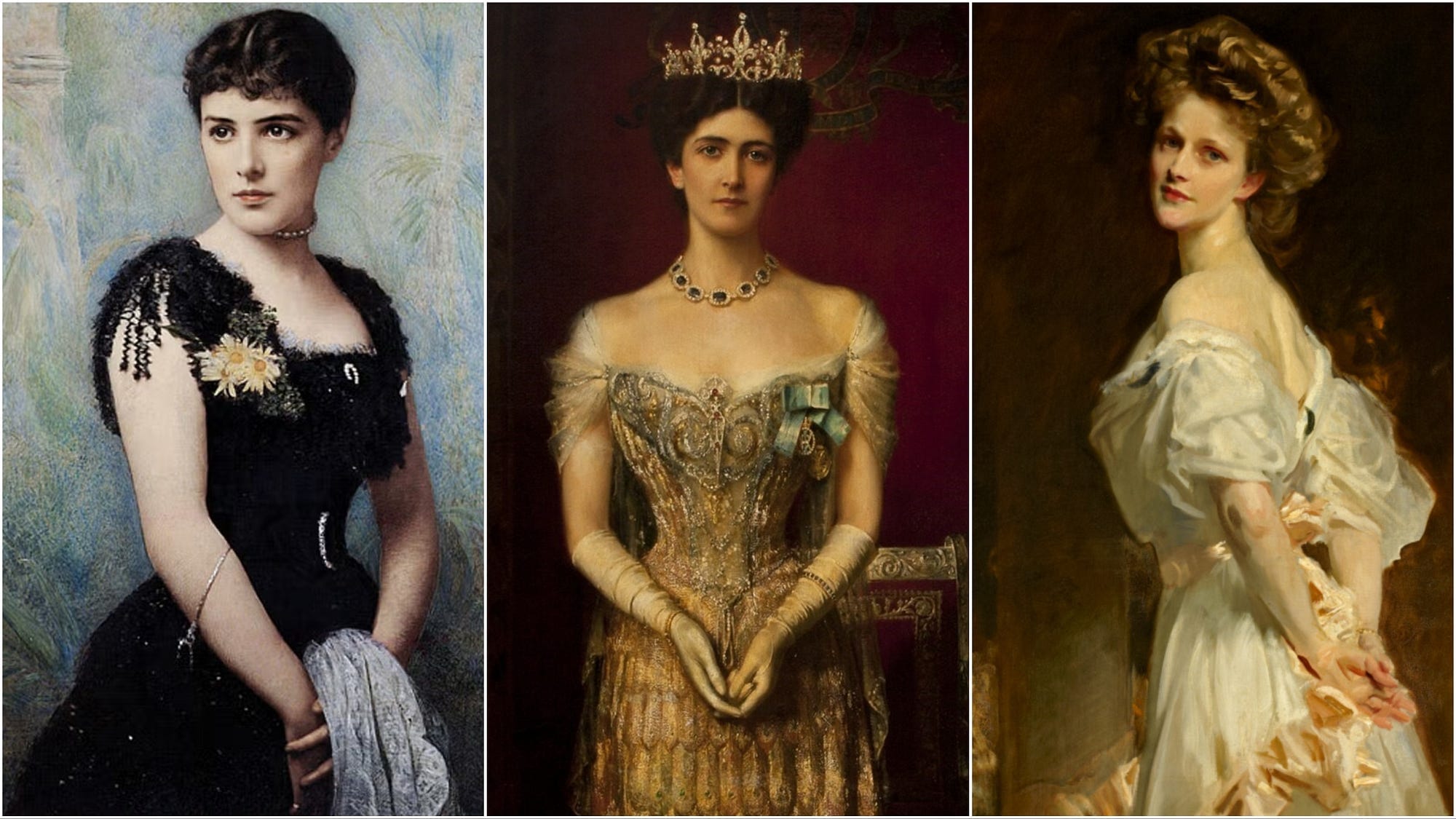
The greatest social climbing scheme in history unfolded between 1870 and 1914, when over 454 American heiresses married European aristocrats in transactions that resembled corporate buyouts more than romantic unions¹. These “Dollar Princesses” didn’t just buy titles—they endured imprisonments, scandals, and personal tragedies that read like modern soap operas, all while injecting over $4 billion in today’s money into cash-strapped British noble families².
The most shocking truth? Many were literally forced into these marriages through threats, imprisonment, and emotional blackmail by families obsessed with social status. Yet their sacrifices created some of history’s most influential bloodlines, saved Britain’s architectural treasures, and proved that American money could buy anything including entry into European royalty.
Here are the 20 most fascinating Dollar Princesses whose scandals, triumphs, and tragedies reshaped both American and British society forever, ranked by the drama and impact of their stories.
The Pioneers of Scandal, Upon Scandal, and More Scandal
1. Jennie Jerome Churchill – The Tattooed Rebel Who Created History
When Jennie Jerome married Lord Randolph Churchill on April 15, 1874, she shocked Victorian society in ways that went far beyond her American origins³. She was tattooed—scandalous for any woman, let alone an aristocrat’s wife—and her father Leonard Jerome was known as a philandering Wall Street financier who kept multiple mistresses.
The Churchill family was horrified by the engagement after just three days of courtship, but Jerome’s $4.3 million dowry (in today’s money) proved irresistible⁴. What they didn’t anticipate was getting a daughter-in-law who would rewrite British social rules through sheer audacity.
Jennie conducted numerous affairs throughout her marriage, including rumored relationships with the Prince of Wales and other prominent political figures⁵. After Lord Randolph’s death in 1895, she married twice more—including to George Cornwallis-West, who was 20 years younger and actually younger than her son Winston.
Her most lasting legacy? Winston Churchill inherited his mother’s American confidence and political instincts, which arguably influenced his leadership style during World War II. Jennie proved that American women could not only enter British aristocracy but fundamentally change it.
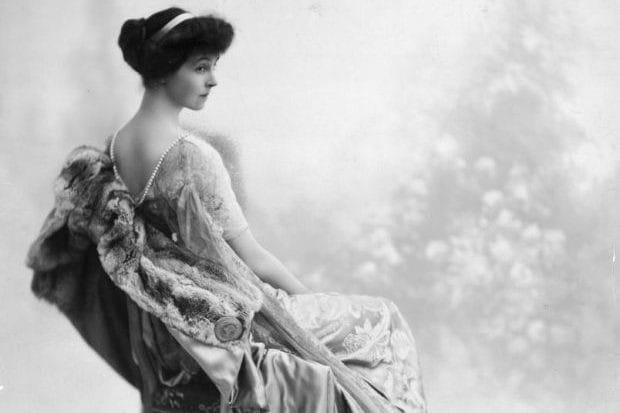
2. Consuelo Vanderbilt Marlborough – The Duchess Who Walked to the Altar in Tears
Consuelo Vanderbilt’s 1895 marriage represents the most calculated and brutal Dollar Princess transaction in history. Her mother Alva Vanderbilt literally imprisoned her daughter for months, threatening suicide and disownment until Consuelo agreed to marry Charles Spencer-Churchill, 9th Duke of Marlborough⁶.
“I spent the morning of my wedding day in tears and alone; no one came near me,” Consuelo later confessed⁷. She was already engaged to Winthrop Rutherfurd, whom she loved, but Alva had the couple physically separated and forced Consuelo into the arranged marriage.
The $2.5 million dowry (approximately $76 million today) was the largest of the era, and it came with a price⁸. On their honeymoon, the Duke coldly informed Consuelo that he had only married her to save Blenheim Palace from bankruptcy⁹. The marriage produced two sons but remained loveless until their eventual divorce.
“Consuelo’s dowry was the biggest,” confirms historian Anne de Courcy. “The Marlboroughs would not be living in Blenheim now if it hadn’t been for Consuelo. It was American money completely”¹⁰. The irony? Consuelo eventually found happiness in her second marriage to a Frenchman who had loved her since her youth.
3. Frances Ellen Work Fermoy – Princess Diana’s Gambling Great-Grandmother
Frances Ellen Work’s 1880 marriage to James Boothby Burke Roche, future Baron Fermoy, seemed promising initially¹¹. As a stock and railway heiress worth $2.5 million, Frances brought substantial wealth to the impoverished Irish nobleman.
The disaster began immediately. James was a compulsive gambler who systematically destroyed Frances’s fortune through reckless betting and extravagant living¹². Frances’s father Frank Work had predicted this outcome and tried to protect his daughter by writing her out of his will, but the damage was done.
The marriage became so toxic that Frank Work agreed to pay off James’s massive debts in 1891 if he would divorce Frances and give her custody of their sons¹³. James agreed, but the family saga was far from over.
Here’s the twist that changed history: Frances’s son Edmund Maurice Roche returned to England in 1920 to become the 4th Baron Fermoy, ignoring his grandfather’s will that forbade family members from living in Britain¹⁴. Edmund’s daughter Frances Ruth Roche married the 8th Earl Spencer, and their daughter Diana Spencer became Princess of Wales in 1981.
Frances Work’s gambling-addicted husband indirectly created the bloodline that produced the most famous royal of the modern era.
4. Mary Leiter Curzon – The Vicereine Who Ruled an Empire
Mary Leiter’s transformation from Chicago department store heiress to Vicereine of India represents the most successful Dollar Princess political career¹⁵. Born in 1870 to Levi Leiter (worth $220 million), Mary met the Prince of Wales during a London visit in 1890, who introduced her to society and future husband George Curzon.
Their 1895 marriage proved that Dollar Princess unions could achieve both personal happiness and historical significance. When Curzon became Viceroy of India in 1898, Mary achieved the highest official title any American woman held in the British Empire¹⁶.
As Vicereine of India, Mary influenced British colonial policy affecting over 250 million people. Her diplomatic skills and cultural sensitivity helped manage the complex political situation in India during a crucial period of imperial administration.
The tragedy? Mary’s success killed her. She died in India in July 1906, succumbing to illness contracted while serving the empire¹⁷. Curzon never fully recovered from losing the woman who had both financed and inspired his political achievements.
5. Nancy Langhorne Astor – The Revolutionary Who Broke Parliament
Nancy Langhorne’s journey from Virginia railroad family to first woman in British Parliament represents the most dramatic political transformation of any Dollar Princess¹⁸. After a disastrous first marriage that ended in divorce, Nancy moved to London and married Waldorf Astor, heir to the American-born newspaper fortune.
When Waldorf was elevated to the House of Lords in 1919, Nancy ran for his vacant seat in the House of Commons and won as a Conservative candidate¹⁹. She served 26 years in Parliament, becoming one of Britain’s most influential political figures and proving that American women could reshape British democracy.
Nancy’s political positions created lasting controversy. She supported women’s suffrage and social reform but also advocated appeasement with Nazi Germany, making her one of the most politically complex Dollar Princesses²⁰.
Her sharp wit became legendary. When Lady Astor told Winston Churchill “If you were my husband, I’d poison your tea,” he reportedly replied “If you were my wife, I’d drink it”²¹.
6. May Goelet Roxburghe – The Real Estate Empire Builder
Mary “May” Goelet brought one of America’s most valuable dowries when she married Henry Innes-Ker, 8th Duke of Roxburghe in 1903²². The Goelet family owned massive Manhattan real estate holdings that generated ongoing revenue far beyond traditional cash dowries.
May’s marriage saved Floors Castle in Scotland and established a transatlantic real estate empire that combined British aristocratic prestige with American commercial expertise. The Goelet Manhattan properties continued generating income that supported Scottish aristocratic lifestyle for decades.
The cultural impact was equally significant. May introduced American business practices to Scottish estate management while adapting British social customs for American audiences during frequent transatlantic visits.
7. Leonie Jerome Leslie – The Sister Who Continued the Dynasty
Jennie Churchill’s sister Leonie also married into British aristocracy, wedding Sir John Leslie and continuing the Jerome family’s strategic British infiltration²³. The Jerome sisters created a powerful American network within British high society that influenced political and social decisions.
Leonie’s marriage produced children who became prominent in British society, extending the Jerome influence across multiple generations and proving that family strategies could create lasting aristocratic footholds.
8. Minnie Stevens Paget – The Social Architect of London
Mary “Minnie” Stevens married Arthur Paget and became one of London’s most influential hostesses, using her American fortune to create salons that attracted political leaders, artists, and intellectuals²⁴. Her American home became a center of British cultural life where political alliances were forged and social movements planned.
Minnie’s strategic entertaining influenced British policy during the late Victorian era, proving that Dollar Princesses could wield political power through social connections rather than formal positions.
9. Vivien Gould Decies – The Railroad Fortune That Built Castles
Vivien Gould brought one of America’s largest transportation fortunes when she married Lord Decies²⁵. As daughter of railroad magnate George Jay Gould, Vivien’s dowry represented the vast American railroad empire that spanned the continent.
Her marriage demonstrated how American infrastructure wealth could support British aristocratic lifestyle while creating business connections between American transportation companies and British commercial interests.
10. Consuelo Yznaga Manchester – The Literary Inspiration
Consuelo Yznaga became Duchess of Manchester and inspired Edith Wharton’s novel “The Buccaneers,” proving that Dollar Princess stories were compelling enough to influence American literature²⁶. Her Cuban-American heritage brought international flavor to British aristocracy.
Yznaga’s beauty and wit made her a social leader in London while her exotic background created a template for how non-Anglo American wealth could successfully integrate into British society.
11. Alice Heine Monaco – The Princess Who Married Twice Into Royalty
Alice Heine achieved the ultimate Dollar Princess success by marrying into actual royalty, not just aristocracy. She first married the Duke of Richelieu, then became Princess of Monaco in 1889²⁷, proving that American money could reach even sovereign royal families.
12. Helena Zimmerman Manchester – The Merchant Fortune That Bought a Dukedom
Helena Zimmerman’s marriage to the 9th Duke of Manchester brought American retail wealth into one of Britain’s premier dukedoms²⁸. Her father’s commercial fortune demonstrated how American business success could translate into European aristocratic status.
13. Elizabeth Drexel Beresford – The Banking Dynasty Bridge
Elizabeth Drexel connected American banking power with British aristocracy through her marriage to John Beresford²⁹. The Drexel financial empire provided ongoing business connections between American and British commercial interests.
14. Pauline Whitney Paget – The Oil and Steel Fortune
Pauline Whitney brought American oil and steel wealth to British aristocracy through her marriage to Sir Almeric Paget³⁰. Her father’s diversified industrial empire represented the full scope of American Gilded Age business success.
15. Alice Thaw Yarmouth – The Pittsburgh Steel Connection
Alice Thaw’s marriage to the Earl of Yarmouth connected Pittsburgh steel wealth with British aristocracy³¹. Her father’s industrial empire helped build America’s infrastructure while her marriage helped preserve British architectural heritage.
16. Maud Burke Cunard – The Social Revolutionary
Maud Burke became Lady Cunard and transformed London society through her influential salons that brought together artists, writers, and political figures³². Her American approach to social mixing challenged British class distinctions.
17. Mary Curzon Howe – The Diplomatic Innovator
Mary Curzon (not to be confused with Mary Leiter Curzon) brought American diplomatic innovation to British foreign policy through her marriage and social connections³³.
18. Ethel Field Beatty – The Chicago Fortune That Supported Naval Power
Ethel Field’s marriage to Admiral David Beatty brought Chicago commercial wealth to support British naval operations³⁴. Her dowry helped finance the naval career that would prove crucial during World War I.
19. Grace Wilson Vanderbilt – The Southern Belle Who Conquered Newport
Grace Wilson’s marriage into the Vanderbilt family demonstrated how American regional wealth could combine with existing Dollar Princess fortunes to create even greater aristocratic influence³⁵.
20. Adele Grant Cavendish – The Final Generation
Adele Grant represented the last generation of Dollar Princesses before World War I ended the era³⁶. Her marriage demonstrated how the system had evolved into more sophisticated business arrangements.
The Dark Reality: Imprisonment, Abuse, and Cultural Exile
The glamorous image of Dollar Princess marriages masked brutal realities that many families preferred to hide. Most American heiresses “had grown up with modern conveniences” but “after marriage, they found themselves chatelaines of houses where taking a bath involved a housemaid making five trips from the kitchen in the basement, carrying jugs of hot water to fill a hip bath”³⁷.
Cultural conflicts extended far beyond physical discomfort. British aristocracy “mocked the ‘dollar princesses’ for their social pretensions and turned up their noses at American culture”³⁸. Many American wives faced complete social ostracism despite bringing the wealth that saved aristocratic families from bankruptcy.
The psychological toll was enormous. Many Dollar Princesses never adapted to British social restrictions after experiencing American women’s relative freedom. Some, like Consuelo Vanderbilt, eventually divorced and returned to America, while others endured decades of unhappy marriages for the sake of their children and social status.
Modern Lessons from History’s Greatest Social Investment
The Dollar Princess era demonstrates how strategic marriages could achieve business and political objectives that pure wealth couldn’t accomplish independently. These unions succeeded because they solved real problems: British aristocrats needed money, while American families needed legitimacy that domestic wealth couldn’t provide.
The phenomenon created lasting value that extended far beyond individual marriages. American dowries saved architectural treasures like Blenheim Palace, funded political careers that influenced world history, and created bloodlines that continue shaping both American and British society more than a century later.
Modern entrepreneurs can learn from the Dollar Princesses’ strategic approach to international relationship building, cultural bridge-building, and long-term investment in social and political networks that create lasting competitive advantages across multiple generations.
The era ended with World War I, when social structures changed permanently and American families found new ways to gain legitimacy. However, the cultural exchanges, architectural preservation, and political influence these women achieved continue impacting both nations today, proving that strategic social investments can create historical legacies that transcend their original commercial purposes.